
How Evergrow Was Created: An Uneventful Prelude

How Evergrow Was Created: An Uneventful Prelude

The more I read about successful entrepreneurs, the more I realize a common theme; a fair amount of them regret never having documented their time while starting their business.

They don’t have any video diaries of their first years or even any posts or notes. I don’t want to live regretting I didn’t do that.

However, I am writing this kind of late. I started conceptualizing Evergrow in 2017 and it’s…December 22nd, 2020 at the time of this writing.

Fortunately, I do have some documents as well as a 10 minute video diary I just watched from December 2018 reflecting on the past year and a half. So I’d say I’m pretty well refreshed on my own history.

This will be the start of my posts I’ll write about my yearly journey in creating a business from scratch.

No seed investors.

No parent’s money.

No “life savings”.

Just a computer and dream (that was corny).

This one will be boring. I just always feel like we need a backstory to why a decision was made. I feel like it can provide some great context for the story later.


The Precursor: January, 2017

Mudd Advertising

It was January 2017 and I was gearing up to move to Kansas City from my home town of Cedar Falls. I needed to find a job.

I had been working at a marketing agency for about two years and had started as a Client Services Representative. It was an entry-level job making $28,000 ($14/hr) per year.

It’s here where I found my passion for marketing. I took a class in college on it… right before I dropped out, but it was Mudd Advertising that gets the credit for it.

I busted my ass here.

I worked long hours just to be the best Client Services Rep. I had eventually climbed the ranks and in less than the two years I was there to the Account Executive position for the agriculture division.

It was a fancy title for, “I get to keep all of my Client Services tasks while also managing and selling smaller accounts in the agriculture industry”. But it had effectively raised my salary to almost $40,000 after comission.

To me, $40,000 was a good amount. I think that’s what my dad was making in the early 2000s in his mid-30s.

However, I knew I was too driven to stop at $40,000 and Mudd wasn’t going to move me any higher. I had learned what I needed to know in marketing to take to Kansas City with me and make some moves.

Mudd overworked and underpaid us. It was probably one of the worst jobs I had. But it was the job that put me where I’m at now.

The Move / Hammel Scale

With my marketing background, I was able to create a compelling marketing resume despite not having any formal education in the area.

I landed a job in Kansas City, Kansas as the Inside Sales & Marketing person at Hammel Scale, a small, industrial scale distributor.

It was a small company but they gave me creative freedom with marketing at first. Plus they started me at $47,500, which was a heathy increase . I didn’t feel like I was taking a step back.

But something never felt right while working at Hammel Scale. I wasn’t educating people on digital marketing like I was at Mudd. That’s what I wanted to do.  I wanted to educate and execute it.


The Catalyst: March, 2017

Around March of 2017, I was living at my new place in Prairie Village, Kansas with my then fiancée. The biggest issue with that place was the backyard was literally nothing but dirt and creeping charlies.

when it rained, our dogs would go out, get muddy, then we’d have to dry them off and wipe the mud off of their paws before they came in.

So I started looking for lawn care services to fix this problem. Maybe a full yard of grass will help.

As I was searching through Google, I noticed there were a lot…and I mean A LOT of lawn care businesses. And literally all of them except for maybe two had their Google My Business listing optimized let alone claimed.

Their websites were even worse… just God awful. It should have been a crime.

The Idea

I had never actually executed marketing for another business. I just knew about it. Sold it. Reported on it.

But how hard could it really be?

I knew there was an opportunity here. There was an opportunity to get these lawn care businesses to stand out over TrueGreen, BrightView, and the local Kansas City Metro gian, Ryan’s Lawn  & Tree.

I just didn’t have a team I could turn the lead over to execute the plan.

I started where the most obvious answer was.

Optimizing their Google My Business listing.

The original idea was really simple.

A one-time, $250 fee for me to claim it and optimize it for them.

Clearly I wasn’t an entrepreur at this point. The biggest flaw in this being that this is a business model for “extra income” and not “recurring income”. And that’s probably what it was intended as when I first started it.

So I got to work on figuring out how to claim and optimize a Google business listing.

Yeah, I still didn’t know how at this point.

Needing a Guinea pig: April, 2017

I didn’t want to start doing this by calling up a random lawn care or landscaping business. I wanted to be a bit more discrete about it and make sure I was doing it right.

So I started looking at who would allow me to do this for them for free.

Churches.

Churches will take anything for free.

I reached out to a couple local churches to see if they’d be willing to let me claim and verify their Google listing. I had to meet with a couple of them to explain the benefits and the process.

The process was literally just me saying,

“I honestly don’t know how this is going to go. I used to sell these services and my team handeled it. I’m starting my own business and want to learn how to do this on my own. That’s why I’m offering this to you for free.

This is where I was able to learn how to perform simple tasks and I could actually get my business off the ground.

But I waited still. I waited until I was a bit more comfortable.

Learning & Getting Certified: May, 2017

I wasn’t yet comfortable with the idea of taking people’s money to perform a task I wasn’t an expert in. I didn’t have any confidence in this yet.

So I decided to get Google Analytics and Google Ads certified. This was something I could have done at Mudd. But it didn’t come with a pay raise, so I never did.

These classes are free on Google. They’re also extremely valuable. Especially if you ever expect to call yourself a digital marketer.

Google Analytics Certification
Google Ads Certification

Taking these wasn’t fun. But I knew it was a step in the right direction.

Long story short, I got certified.

But in the meantime, I used my new marketing knowledge and kept applying it to my day job at Hammel Scale. This, of course, was because what I had with my business idea wasn’t really anything other than an idea at this point.

I was preparing.


That Tai Lopez Training Course

Look, we all make mistakes.

Some of us forget our anniversaries while others join MLMs, peddling products that are overpriced and poor quality. Messaging people from highschool they haven’t talked to in years with “Hey Girl!”

Mine was watching an entire Tai Lopez video ad on Facebook.

It was a video ad on starting your own 6-figure per month social media marketing agency.

It was a good-ass ad.

it was so good, I loaded my credit card up with a $1,200 charge to pay for this damn class.

Don’t make my mistake! Yes, I learned a couple things, but those things you can learn for free! The topics I learned about are below. So just take that advice and save yourself the money.

I thought it would have a lot of useful information in starting by own marketing agency.

I’m not going to lie. There were actually some good things in the video they covered. They talked about LLC vs S Corp, having confidence, and creating tiers.

It was when they started talking granularly about stuff that was just a bunch of horse shit.

Their SEO and Google Ads practices were way out of date and they were teaching things that would get you banned from search engines.

I never finished the course and received my “certification”.

At the end of the day, I’m happy I took the course, though. It did teach me some things about owning a digital marketing agency and getting set up. Beyond that. Nothing.

Niching Down

The BIGGEST takeaway from the shitty Tai Lopez course I took was a simple concept:

Find your niche.

In otherwords, if you’re going to be a marketer, don’t market for every type of business. There’s no value in a jack-of-all-trades.

But there is a ton of value in a specialist.

I thought back to my original business idea of the Google listings for small businesses. I thought niching down was going to be dumb. It was going to severely limit my target market.

But I did it anyways and I stuck with it.

After heavy consideration, I picked lawn care.

It Felt Like the Perfect Fit

There were three reasons why lawn care and landscaping niche felt like the perfect fit.

  1. The industry was very behind on digital marketing. The opportunity was definitely there.
  2. I’d always wanted to start a lawn care business with my dad. We’d talked about it for years, but never did.
  3. I was already familiar with the green industry from working with agriculture clients.

Everything just seemed to kind of fall in place. I felt at peace.

Deciding on a Business Name: June, 2017

At the end of the day, I was a digital marketer. Whether I had just learned how to perform simple digital marketing tasks or not, I knew what I was talking about when it came to digital marketing practices and theories.

Your business name is great, but the domain for the website is better. I knew that going into this and that’s how I decided on my name.

I didn’t want to have my first or last name in it. I wanted the option to sell the business with its own brand identity in the future if I ever decided to entertain that idea.

I also wanted to have some meaning that related to the green industry. Additionally, a simple .com had to be available. I wasn’t going to settle with a .org, .net, .biz, or whatever.

The problem was, almost all of my domains were taken.

blueprintmarketing.com
evergreenmarketing.com
redoakdigital.com
redoakmarketing.com
etc…

I went through so many of these, that I started helping other people find domains for their business when their first choices were taken in the years to come. So much so, I ended up writing a blog post about it on the Evergrow website.

My business partner even wrote a post on his site about 5 months later called, “What to Do When All of the Good Domain Names Are Taken”. I’m not saying he stole my idea… but I mean…

Anyways, it went through a bunch of iterations before I landed on evergrowmarketing.com. The domain wasn’t taken and no one else had registered that name.

I took it. And EverGrow Marketing was born.

Advice to Young Marketers Starting Their Own Agency

Advice to Young Marketers Starting Their Own Agency

>> 7 minute read

Recently, a friend from church asked me if I’d be willing to give someone he knew from chruch advice on starting his own marketing agency.

He was a young, fresh-out-of-college kid who was hungry to start his own marketing business. In other words, he had been brainwashed. And I had to undo everything he had learned whether it was from antiquated, college, marketing lectures or bullshit, get-rich-quick, marketing agency courses from online “digital gurus”.

After exchanging about three or four messages, I knew exactly what he thought about marketing, what he thought worked, and how soon he was going to fail if he kept on thinking the way he did.

He sounded like every other “digital marketing guru” in the world. The same polished turd that floods your Facebook and LinkedIn feeds with dumb, rhetorical questions that have obvious answers.

Yeah… those are the ones.

He seemed to blow off a lot of the answers I gave him. If he didn’t like what he heard, it seemed like he thought I was wrong.

Honestly, I don’t care. I have the successful marketing agency. He doesn’t.

So with that, here is my advice to those young marketers willing to listen… and probably be offended.

We’re kicking it off with this one.

The number one reason people fail at starting a marketing agency  (besides they simply don’t know how to run a business) is because they think what Tai Lopez teaches actually works.*

*Not an actual statistic…

It doesn’t.

Tai Lopez’s marketing agency course has about the same success rate as being successful in a multi-level marketing business (legal pyramid scheme).

It’s built on the idea that your potential clients are morons and you’ll be able to swindle a minimum of $5,000/mo out of anyone.

Your clients aren’t idiots. They’re business owners. And business owners are 200% smarter than nearly every marketer out there.

Before you make your judgements, yes, I took a Tai Lopez marketing course to see what they teach. It’s 10% good marketing practices, 20% outdated marketing practices, and 70% assuming your prospects are idiots.

The real idiot is the one thinking they’re getting value out of these courses.

And it’s not just Tai Lopez. It’s any of those social media, marketing influencers who have some proven method to success for your agency.

Take your pick. Billie Gene, Dan Lok, I’ll even throw Grant Cardone in there.

Those who cannot, teach.

I will say, one great thing Tai Lopez does teach, is niching down.

If you’re a marketer and you don’t specialize in a certain industry, then grab a shovel and start digging your own grave.

It’s 2020, there’s no way little Johnny-know-it-all who’s fresh out of college is going to be competing with multi-million dollar marketing agencies.

If you don’t focus on a niche, you’re not an expert in anything.

We’re the experts in landscaping and lawn care. Clients come to us because we’re a member of NALP, write for multiple landscaping publications, and are featured on landscaping podcasts. We know marketing and we know the industry.

You’ll never penetrate a market if you don’t focus on it.

Birdshot probably won’t kill a deer. But .30-06 will.

Be a .30-06.

This almost goes without saying. If you’re going to niche down, you need to understand your niche. Not just the market, but the trade.

If your niche is dentistry, you better know a lot about dental practices. Learn what services go hand-in-hand with each other, how often you can get a patient to come back to the office. Learn about how dental insurance works.

In other words, think as if you own a dental practice. You don’t have to be a dentist. Just understand the business and how it makes money the best.

Read books about running your own practice. There’s literally a book on everything. Here’s one on how to run a successful dental practice  (I Googled this after I typed this example).

My business focused on the landscaping industry. That lead me to read books like:

This allowed me to connect with my clients and become more credible in their eyes.

Knowing how to market their business is only half of the battle. You need to know how their business works.

It’s my belief marketers don’t know how to handle money. They may know how to allocate other people’s money. But if the amount isn’t dictated by an outside party, they’ll blow through it faster than a teenage girl at an outlet mall.

In turn, they don’t know how to properly run a business. So when you get turned down, it’s because your solution didn’t make practical business sense.

You have to realize marketing is certainly a positive investment for anyone. But YOU may not be. If the business didn’t buy into your marketing plan, it’s probably because:

  1. Your plan didn’t solve THEIR problems
  2. You didn’t quantify how you could help them in terms of their own profit numbers
  3. They just don’t trust you

If a business rejects your proposal, it’s not because they don’t see the light. It’s because you didn’t present a solution that solved their problem.

You need them to tell you what their problem is.

Business owners work to solve problems. Marketers look for problems to solve.

Don’t look for problems. Listen and provide a solution if you have one. If you don’t, then let them know. You don’t have a solution for everything and you shouldn’t.

People respect humility over arrogance.

On that note, be sure to humble yourself. You don’t know everything and you’re not expected to. You’re expected to find the solution to a problem.

I’ll admit. When I first started out, I was a bit arrogant (I also realize I’m being pretty arrogant in this blog post…).

My word was law in SEO and even social media (though, I really didn’t know that much about social media at the time).

I knew a lot about SEO, but the thing with SEO is that a lot of it is really subjective. Google has over 200 ranking signals and they do their best to not give away their secret.

So I’d say absolute statements like, “Image titles and file names don’t affect rankings, only alt-text” or “Duplicated content negatively affects your ranking.”

In case you’re wondering, the first statement isn’t for sure known, but it’s a best practice… just in case (If I owned a search engine, I would definitely look at these). Regarding the second statement, I haven’t seen anywhere that duplicate content affects your rankings negatively.

But it doesn’t help the duplicated page.

I’ve even burned some bridges being arrogant and argumentative to other SEOs. Was I right in a lot of cases? Sure.  But it doesn’t matter.

The funniest part of all of this was I was never explaining any of this in detail to clients or prospects. So why the hell was I even doing it?

Humble yourself. You’re not a god and no one expects you to be. They expect you to be honest and personable.

It’s not your job to know the answers. It’s your job to find the answers.

Let me knock this one out right now. Your formula for marketing success or attracting leads isn’t a secret. I can guess it right now.

First you deploy an ad on social media (probably Facebook) that has an enticing offer in it to get signups. Like it’s some kind of sweepstakes. Just enter some information for a chance to get free {insert product or service}.

Then you get a bunch of (unqualified) leads.

You then use those leads and set them up in an email database that deploys scheduled emails. Probably 4 or 5 and the content changes depending on how they interact with the email (or don’t).

Those emails lead them through a “sales funnel”.

Your client then gets lots of still, unqualified leads. They’ll close some, but they’ll be shitty customers (oh sorry, you’re not supposed to know that yet).

Finally, you’re using ClickFunnels. Or some knockoff to do all of this.

This is a short term strategy. It’s not meant to get repeat customers or work forever. Does it work? Sometimes. But more often not. Especially if you’re not in the ecommerce industry.

Your secret isn’t a secret. It’s been beat to death.

The only thing worse than a used car salesman in the early 90s is a marketing entrepreneur.

I actually wrote a post about why people hate digital marketers awhile back. I encourage you to check that out if you have some time.

In the beginning, it was easy to sell things like SEO. High ticket items with minimal effort. At least it was for marketers at the time.

They (and still do) played on the ignorance of business owners. Throwing out buzzwords like “meta tags”, “alt-text”, “link equity”, etc. Things real business owners don’t have time to learn or understand.

“Sure, whatever, just take care of it.” Is typically what went through their minds.

It’s still the case.

But more and more business owners are catching on to that. They’re not stupid. In fact, they’re smarter than most people who call themselves marketers that rely on 3rd party apps like ClickFunnels.

If you want to stand out, you’re going to need to establish trust first. You need to help, not sell.

When I first started, I set out to become a resource for landscaping and lawn care business owners. I didn’t sell and I didn’t promote. I just helped and answered questions.

If you want to get an idea on how I “helped”, check out this link. Someone posted their website on a landscaping business owner forum for critiques. So I gave them… in detail.

I made it so if he wanted to do his own SEO, he could follow everything I said and didn’t need me.

This is the kind of credibility you need to build for yourself. It’s also the exact same thing that Gary Vaynerchuck preeches in his books “Crush It!” and “Crushing It!”.

SALES WILL COME.

They did for me. It just took a little while for the credibility to start building.

It’s no doubt that your business can’t succeed without sales. So naturally you feel like you need to be salesy and create an enticing pitch.

You don’t.

I would argue that being salesy and having such an exhuberant attitude when talking with a prospect is draining on them (and you) and keeps their guard up.

I find the most success when I treat them as a family member calling me. I don’t use any inflection in my voice, I don’t pretend I’m excited if I have nothing to be excited about, and I really don’t care if I get the sale.

The first thing you have to get through your head is that not all sales are good.

Trust me one this. You won’t. But I have to say it anyways.

Shitty clients are stressful. They’re the clients that want everything for nothing and make you bend over backwards for low margins. You don’t want this.

Instead, be an educator. Your leads should come to you. Not the other way around. To do this, you have to get your name out there.

  • Comment and help on forums
  • Write for industry related magazines and publications
  • Try to get featured on podcasts
  • Join social media groups (Do NOT pitch here. It’s an easy way to get booted and chastised)

Leads will come to you. And when they do, don’t be salesy. Vet your potential client and let them know you need to see if they are a good fit for you. Business is a two-way street.

They don’t have to buy from you and you’re not their slave.

The Office had a perfect example of this from the “best” salesman in the area.

Meredith: “So, you’re here to sell me some paper.”

Danny: “Well actually, no, Ms. Van Helsing, that’s not why I’m here. I’m here to meet you. To see if we’d be a good fit.”

Be a Danny.

If you didn’t dress in a suit and tie before you became a marketer, then don’t do it now. It’s not you. It’s inauthentic (I have a hard time saying anything relating to authenticity without thinking about Gary V. I feel like he could trademark that word by now).

No one’s buying it.

Your appearance and how you conduct yourself makes an impression. Unfortunatley, snazzy-dressed marketers look sleezy.

They should buy into you. Not someone you’re not.

Sorry for the long post

I didn’t mean to make this post so long. I had a lot to say, apparently.

The truth is, if you’re a marketer trying to get started, you have to realize you are a drop in the bucket.

If you’re trying to get noticed, you have to do what no one else is doing, and right now, that’s literally just being yourself.

If you’re a douche bag, naturally, you’re gonna have a hard time.

That’s all for now. I post a lot shorter content on my Facebook page if you want to give that a follow. Or don’t. I don’t care.

Why I Started Writing Book Reviews

Why I Started Writing Book Reviews

This post isn’t directed towards you or any part of any population. It’s directed towards me. I don’t think you need to write book reports on the books you read. I think I need to.

I’m not going to be writing these to get any kind of traffic or get people to buy books through my Amazon affiliation (although, why wouldn’t I link to them?).

I’m writing these because this is the best way I can remember what I read without rereading books.


Why write book reports?

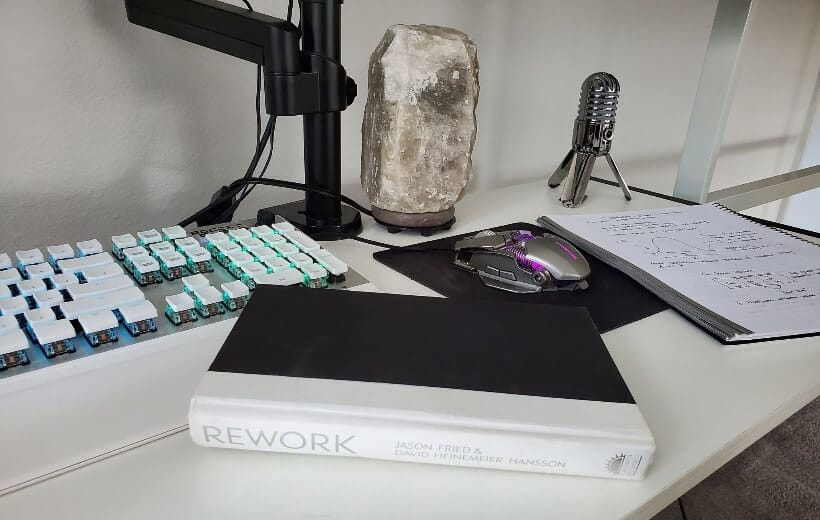
The other night, I finished Rework by Jason Fried and David Heinemeier. It was a fantastic book. It’s now littered with highlights, notes, and brackets.

All of my books are.

I do this because it helps me find passages that I love. Direct quotes I can’t recall perfectly from memory.

I remembered everything about “Rework” after I read it.

I went to put it away on the bookshelf and pick up the next book to read. I picked up and put down books multiple times trying to make a decision. Finally, I settled on a book I bought in the Columbus Airport. One Thing by Gary Keller and held it in my left hand.

I glanced over to a different shelf and noticed The Master Key to Riches by Napoleon Hill. It was a book my business partner had recommneded to me months ago. I had started reading it but never finished.

I could tell because I had made highlights and notes a quarter of the way through.

I picked it up with my other hand and opened it on top of The One Thing I was carrying.

As I read through my highlights trying to figure out where I left off, something mortifying occurred to me.

I couldn’t remember a damn thing!

I’d highlighted sentences and bracketed paragraphs but had no recollection of the surrounding context.

I do remember this book being a terrible read and I can admit it probably bored me. But before I let myself give up on questioning why I couldn’t remember anything about this book, I looked at some of my other “favorite books” I’ve read.

Two of which being Dale Carnegie’s How to Win Friends and Influence People and William Zinsser’s On Writing Well.

I remembered a few things from those books but I couldn’t pull any quotes out of my head. On top of that, I couldn’t even remember the different topics On Writing Well covered.

This terrified me. I’m not going to read books over and over again until I get them drilled down. I should be able to read them once and remember most of the key details.


I had an idea

Recently, I had started taking Lean Six Sigma Engineering classes to get my green belt in the field. I’m taking it seriously because I care about what it teaches.

I prove that I care about the subject by the immense amount of notes I’ve taken. Often more notes than what the instructor says or writes.

I’ve noticed my rentention to a lot of these topics has been better than it’s ever been. Including high school and college. I don’t even have to look at my notes. I just remember everything and I’ve been scoring 100% on all my tests.

I figured if I wrote about a book after I read it, it would help me retain a lot more information. Even if it’s just a few more bits and pieces that I was remembering before.

Most people already knew taking notes and writing about things helped retain more information. I’ve never been a note taker and all of that seemed anecdotal to me.

It wasn’t until Lean Six Sigma that I realized just how much I was retaining.


How do I even write book reports?

I haven’t done this since middle school. So I guess the best thing to do is write it as if it were a blog post.

I’m going to break it down and structure it in the same format I always write:

  • Introduction
  • Why this topic is important
  • Specific things about the topic
  • Applying the topic to real life
  • Summary

I hope I’m not the only one that gets benefit out of writing these. It wouldn’t feel like a complete waste if that were the case… but a waste nevertheless.

So this is how my book reports (book reviews) will be structured in the coming posts:

  • Introduction
  • Synopsis
  • Notable Topics
    • Topic #1
    • Topic #2
    • Topic #3
  • How I can apply what I read
  • Who I would recommend this book to


I hope this helps

I hope this helps me remember more of what I’ve read in the past. It’s not that I’ve completely forgot. It’s just I need to flip through the book to job my memory.

I don’t wnat to have to jog it for every postive detail I’ve read. I just want to recall it at will or whenever the situation calls for it.

But I also want these book reviews to serve you well too. I want them to be interesting and pique your interest without you not feeling like you don’t need to read the books. As long as you think they’re a good fit for you.

If you have any recommendations for me, put them in the comments below and say a little about why you like that book.


Book Review: “Rework”

Book Review: “Rework”

>> 9 minute read

This book was recommended to me by my business partner, Cody. Actually, it wasn’t recommended. It was mailed to me with the expectation I would read it.

Side note, if you want someone to read a book, that’s how you do it…

But he’s good about “recommending” books other people should read based on who they are rather than wanting other people to read books because it helped him.

I could tell it was good book by the way the spine and cover were falling off. It’d been read. A lot.

Anyways, let’s get to it.

 –Related: “Why I started Writing Book Reviews”

Synopsis

Rework was written by founders and creators, Jason Fried and David Heinemeier, of 37signals, which is now, more notably called, Basecamp.

Basecamp is touted as an all-in-one business software. A software to manage projects, team communications, files, schedules, and more. All for a low cost of $99/mo. No matter how many users you have.

It’s basically an Asana project manager competitor that’s married to a competitor of Slack.

I preface the synopsis with this because, at its core, the book is about how to successfully grow and manage a startup or small business.

I’m confident the guys who built a business management software that’s used by over 3.5 million businesses know what they’re talking about when it comes to managing a small business.

But what is the book really about?

It’s a book about bureaucratic bullshit and a counter-culture to the “hustle-and-grind” mentality.

If I could write one sentence summarizing the book, it’d be:

“Forget everything you learned about a business and ‘what it takes to be successful’ because it’s a bunch of sensationalized garbage.”

Rework covers hot-button topics and suggests things like:

  • You don’t need to work 8 hours per day
  • You definitely don’t need to pull all-nighters or burn the midnight oil
  • Waking up early as a trait of a successful person is a myth
  • Quit being so damn professional
  • Don’t worry about out-doing your competition
  • Meetings are toxic
  • And much more

There are a lot of how-to books and motivational literature that teach you how to grind it out or hustle until you hate yourself. This book isn’t one of those.

If you’re looking for one of those, consider reading the 10X Rule by Grant Cardone or Crushing It! by Gary Vaynerchuck.

But I can tell you right now, after reading this book, the hustle-and-grind attitude is stupid, lazy, and susceptible to burnout faster than a 24-year-old named Skylar in a Honda Civic.

Notable Topics

There are honestly too many notable topics to point out in this book. The main purpose of me writing this is so I have better retention of some of the best points of a book. However, I think I’ll be remembering a lot of what was in here.

With that, I’ll leave you with a few of my favorite topics. These are ones I’ll use frequently when lambasting my peers about their institutionalized concept of how to achieve success.

1) Workaholics are stupid

Our culture reveres people who kill themselves over work. As if they’re dedicated, loyal, and responsible. But really, they’re just dumb.

Unless your job requires you to be on location for a specific amount of time (police officers, fire fighters, doctors, or anything like that), there’s no reason to be working 10-14 hour days

I’ve paraphrased a few key points here:

  • This kind of ethic isn’t sustainable. You’re gonna kill yourself.
  • You can’t fix problems by throwing hours at them. Time doesn’t solve problems. Your brain does.
  • Workaholics don’t look for ways to be more efficient. They get off on working more hours because it makes themselves feel good. It’s intellectual laziness
  • “They’re perfectionists that spend too much time fixing inconsequential details instead of moving on”

“Workaholics aren’t hereos. They don’t save the day, they just use it up. The real hero is already home because she figured out a faster way to get things done.”

In my own words: there’s no need to kill yourself over long hours and sacrificing your work-life balance. There are faster and more efficient ways to get the work done.

Jason and David asked themselves how. So they created 37signals.

2) Don’t be an entrepreneur and don’t start a startup

Be a starter and start a small business.

Entrepreneur is a term used by posers wearing suits they can’t afford while pretending to be a marketing guru and delusional people peddling MLM bullshit.

A starter is someone who is doing what they love and turning a profit. Entrepreneurs are rarely profitable.

Social media marketing gurus love money and are “doing marketing”. They’re not making a profit. And if they are, it won’t last. It’s a short term way to earn money while getting a lot of people to hate you. They are Eddie from “Ed, Edd, and Eddie”.

MLMers are touting bullshit quadruple-digit monthly incomes while calling themselves “entrepreneurs” peddling a product they don’t own, manufacture, or control the distribution of. If you’re one of these and want to call me out, feel free to comment below.

If money is what you love, what you do to get there will fail you.

So what about being a startup?

A startup is a “magical place” where you call yourself an entrepreneur and throw money at problems (often other people’s money, such as seed investors).

Startups try to scale too fast and get to the 100-employee mark as fast as possible, yet aren’t concerned with profitability until they get there.

Be concerned about your profit from day one. Eventually, your startup will have to “grow up” and start dealing with real-world issues like payroll, accounts receivable, and sustainability.

Startups try to start at the top… Start…UP…
Starters start at the bottom.

3) Build an audience, not a market

An audience follows you. They care about what you have to say because what you say is meaningful to their life.

This chapter screams “Gary Vaynerchuck”.

Ignore the press releases that no one cares about and don’t worry about the next ad that will get your more customers.

Start making content that people give a shit about. Again, they don’t care about your promotions. They want to know how to manage their finances, groom their dog, or edit photos. So tell them how. They will not only listen, but they’ll follow you.

If you’re worried about giving away all of your secrets, just remember, emulate chefs and drug dealers get it right.

Those are references in the book under the chapter on “promotion”.

“When you build an audience, you don’t have to buy people’s attention — they give it to you.”

“Share information that’s valuable and you’ll slowly but surely build a loyal audience. Then when you need to get the word out, the right people will already be listening.”

4) Underdo your competition and let your clients outgrow you

If you try to be the best at everything you’ll end up being the best at nothing.

The expression, “The Jack of all trades is a master of none” can’t be any truer in this instance.

If you have a profitable product or service that services your customers just fine the way it is, don’t try to bend over backward for one or a few of your “high-paying” clients.

Those clients think they can run your business for you. They come and go. There will always be people for your product as long as your product is for the people.

If your competitor does everything, don’t try to be like them. Do what you’re good at and be the expert in that.

One of my clients with my business only does fertilization and insect control for lawns. He doesn’t mow, landscape, or aerate.

His business’s name is literally “The Fertilizer Guy“. And he dominates. People come to him because they know he’s the expert at restoring lawns. Not just maintaining them.

If he wants to branch out in the future and start doing aeration, he can. But he’d rather crush it at one thing then be mediocre at multiple things.

As noted in a previous chapter in the book:

“Build half a product, not a half-assed product.”

Keep two things in mind:

  • Don’t let your customers demand more from you. Let them outgrow you if your services no longer provide the solution they’re looking for.
  • Don’t worry about outdoing or doing more than your competitors. You’re better off doing less than your competitor by being better at those fewer things and even more profitable with a lighter workload.

5) Treating employees like children will produce childish results

The direct quote in the book is, “When you treat people like children, you get children’s work.”

Micromanaging doesn’t produce great results. Hiring people with different personalities than you who are comfortable enough to say your idea sucks ass is what produces great results.

The book uses the example of a dinner party when talking about company culture. It has you imagine you were at a dinner party with a bunch of people you didn’t know. The only conversations would be boring small talk that didn’t go anywhere.

These kinds of interactions never dive into deep or controversial topics that could have a positive impact on a circumstance.

However, if you were at a dinner party with a bunch of your friends and family, there would likely be a lot of laughing and productive and fun conversations.

If you can’t hire or give autonomy to employees to emulate that second scene, your business isn’t going anywhere.

You also have to realize that employees don’t have the same amount of skin in the game as you. They never will.

So I’ll end this section with an excerpt from the book,

“What do you gain if you ban employeees from, say, visiting a social-networking site or watching YouTube while at work? You gain nothing. That time doesn’t magically convert to work. They’ll just find some other diversion.

And look, you’re not going to get a full eight hours a day out of poeple anyway. That’s a myth.”

How I can apply the principles and practices

Cody would live and die by this book. Not because the book has taught him a lot. But because it’s how he already is. He exemplifies a lot of these principles. And I’ve already started taking on a few characteristics of those.

For example, I’m no longer worried about competition. I only focus on us. To me, we don’t have any competitors. We have us. And if you don’t want to work with us then it won’t bother me. We’re just not a good fit.

Being more efficient with my workload

Another principle I believe is the myth of the 8 hour work day. It’s not needed. I can get more done and make more money in an hour with my business than I can in 8 hours at my day job.

Not that I’m able to do that every day, but the opportunity is there. Regardless of the matter, 8 hours is not a requirement to be productive. In fact, I believe it’s a productivity and morale killer.

Eight hours isn’t needed. Especially if you’re efficient with the time you have. I’m not.

I have the ideas to turn a 40 hour project into 10 hours or even less, I just haven’t acted on them  yet. I would have to drop client work to work on that. But perhaps that kind of investment is needed.

I’ll neve be intelligent with how I handle my workload if I can’t make some time to set these processes and templates up.

Learning to say no to clients

I’m terrible at this. And Cody knows it. He’s just too nice to say anything about it. Or maybe he’s not and just hates confrontation.

Anyways, I have a really hard time telling new clients they’re going to need to be booked out a few months before we can build their website. Especially in the industry we’re in. Two to three months out is too long and the landscaping season is practically over by then.

I’ve been doing better about saying no to specific and custom requests. But when it comes to the initial sign-on and timeline promises. I suck. I’ll get better at this. Especially after reading this book.

The book has a quote in the section, “Say no by default” that goes like this:

“It’s better to have people be happy using someone else’s product than disgruntled using yours.”

I think that’s true about timeline expectations and I will work on that.

Watching what I say and how I say it

There’s a pretty good section in the book on culture. And in that section there are two topics that jump out at me. They are:

  • Sounds like you
  • Four letter words

“Sounds like you” is a section that’s devoted to calling out the fake-ass professional tone you take when you write work emails.

The examples in the book are, don’t say “transparent” when you mean “honest” and don’t say “monetization” when you mean “make money”.

It’s actually pretty reminiscent of William Zinsser’s message in On Writing Well. Though, I think Zinsser said it better when he said:

“We are a society strangling in unnecessary words, circular constructions, pompous frills, and meaningless jargon.”


“…every profession has its growing aresenal of jargon to throw dust in the eyes of the populace.”


“Our national tendency is to inflate and thereby sound important.”

In the words of Thoreau, “Simplify, simplify, simplify.”

I’m doing better at saying what I mean in a clearer and more concise way that comes off as personal rather than robotic. I hope you can tell that in my writing.

The second topic is about avoiding four letter words. And not shit, damn, and fuck. It’s talking about “need”, “can’t”, “easy”, “fast”, and even “ASAP”.

These words not only lie about the reality of the situations, but they also devalue any task or conversation that doesn’t include these words, especially ASAP.

ASAP gets used so much in business that it makes everything that doesn’t include “ASAP” not important.

I already work on this idea a lot. It’s something I subconsciously picked up while reading Dale Caregie’s How to Win Friends and Influence People.

What you say and how you say it matters and people will either choose to respect you over your choice of words or resent you.

Who I would recommend this book to

I would recommend this book to two people.

1) Workaholics who think the 8-hour day is a bare minimum

2) Someone interested in starting a sustainable business model

I would recommend it to the first person because I feel like they need to be opened up to a new train of thought.

The purpose of this review wasn’t to summarize it to the point where you don’t need to read the book. It was meant to paraphrase larger topics but also pique interest if you think what I’m saying is hogwash.

What I had to say doesn’t explain a lot of the reasoning behind the topics and sections of the book. If you want to learn more, read it.

The second person I’d recommend this to is the starter. Someone walking into an endeavor with a fresh set of eyes and mind that isn’t burnt out to a rubber crisp.

Today’s starters are our only chance to change the inefficient and impersonal culture of tomorrow’s business models.

Think you could get something out of this book? Click on the book cover to the right to pick up your copy.

Why Trash-Talking Your Competitors Loses Sales

Why Trash-Talking Your Competitors Loses Sales

>> 5 minute read

If you’ve ever been in a sales role (yes, this includes being a business owner) then you’ve probably heard you should never say anything negative about your competition, or at least, what you think is your competition.

If you’re confident in your product, you know your competitor’s product sucks anyways. Your product or service is superior in some way that outweighs anything they can do, whether it’s professionalism, punctuality, reliability, or price. After all, if you don’t have a selling point that is better than the other guy’s then what are you selling for?

So why can’t I tell my prospect or client why I rule and they drool? It’ll definitely steer them away from buying into their hunk of shit. Won’t it?

No. Probably not. In fact, you might have steered them away from you if you did.

Here are 6 brutally honest reasons not to trash-talk your competition.

1) You’re gonna look like an asshole.

No one wants to work with an asshole. Your client is talking to you about how you can help them. Telling them how your competitor can’t help them doesn’t do you any service besides showing your client that you’d rather put others down than build yourself up.

If your services are as good as you claim them to be, you won’t need to tear down your competitor or even mention them.

After all, who wants to work with someone who badmouths anyone they disagree with? If you badmouth your competitor, I can only assume what you say about customers to your friends.

2) You’ll come off as selfish.

The number one trick to selling is providing value to the client. Value comes in all different forms. Value to one client might be the price while to another client it may be professionalism and to a third, reliability.

How can you provide value to your client? Not, how can you take away value from your competitor? Telling a customer what a shitty job your competitor does makes you come off as self-righteous and narcissistic. They know that your confidence is built on perception and not by presentation. They can smell that bullshit.

3) You’ll show you’re insecure.

If you’re truly confident in the quality of work you provide or whatever your main selling point is, you don’t need to siphon the confidence from your competitors — you have enough in you already.

If you lack confidence, you’ll be able to talk more about how the other guys can’t do a perfect job than be able to show how great you are.

Think about this the next time you hear someone gossiping about someone. Pay attention to what they say. Are they saying something negative about someone? What does that make you feel about them? Probably that they’re an asshole (see #1). This person is probably building themselves up by tearing someone else down. Anyways, you can tell they’re doing this. So can your customers — and they’re on high-alert when being sold to.

4) Your trash-talk will overshadow your value.

Let’s pretend you’re confident in your work (if you talk negatively about your competitors, you’re either a shitty salesperson or your work sucks, but we’ll get to that). If you’re confident in what you do, then why would you need to tear down someone else? You have the best damn services in the market.

Even if you are the best at your selling point, you might be absolutely terrible at another. Clients complain about things that seem trivial to you like being on time, having more open and structured communication, or asking you to do things that weren’t in the agreement. Either way, you’ve probably dealt with some pissy clients.

But instead of remedying those issues, you’d puff your chest out in front of a new prospect and say, “Well, they’re not going to do this for you, but I will. You should be happy with what I provide. You’re going to regret it if you go with them.”

See #2. It’s not about what you are the best at or what your competitor sucks-ass at. It’s what your client wants.

5) You can look like an idiot.

One of the biggest things I see is business owners and salespeople trash-talking a competitor’s work. Here’s the thing though — you don’t know anything about the client/business agreement. You don’t know what they’re paying for.

If you’re a lawn care business owner, you might find yourself talking about a crew that doesn’t edge where the grass meets pavement or that the lawn is full of weeds. But what you don’t know is that the client is fully aware but literally only wants lawn mowing. That’s it.

So, you’re talking crap about something the client doesn’t even want the business owner to do?

Another example. One web developer starts talking negatively about how a competitor built a website. Maybe the content on it is thin and weak. Maybe the website lacks a decent amount of pages for what the client offers. But that developer really has no idea what the client paid for or what was agreed upon. They also have no idea what expectations were already set or what was clearly communicated.

This can land you in some hot water if you’re prospecting a potential client that has your competitor already working for them. Such as a site audit or quote.

6) You’re not going to look like a professional.

Getting quotes and estimates from professionals where they don’t worry about their competition shows me they are professional and are confident in their work. That means they’re professionals in the industry.

You can tell when someone is a professional by their presentation. They don’t need to badmouth their competitors. All they need to do is tell them how their product will achieve their goals.

Professionals care more about the solutions to the client’s problem. Amateurs care about how they look in front of the client.

Your prospects and clients see through all of this.

Most importantly, you’ll simply come off as unprofessional. Professionals aren’t assholes, selfish, insecure, negative, or idiots.

Professionals are kind, selfless, confident, positive, and intelligent. Just being these things are going to close the deal. Everyone wants to work with one of these people, not the previous. Talking negatively about competitors is a really good way to showcase just how much of an amateur you are.

Got a problem with these? Fight me.

Just kidding, I’ll lose.